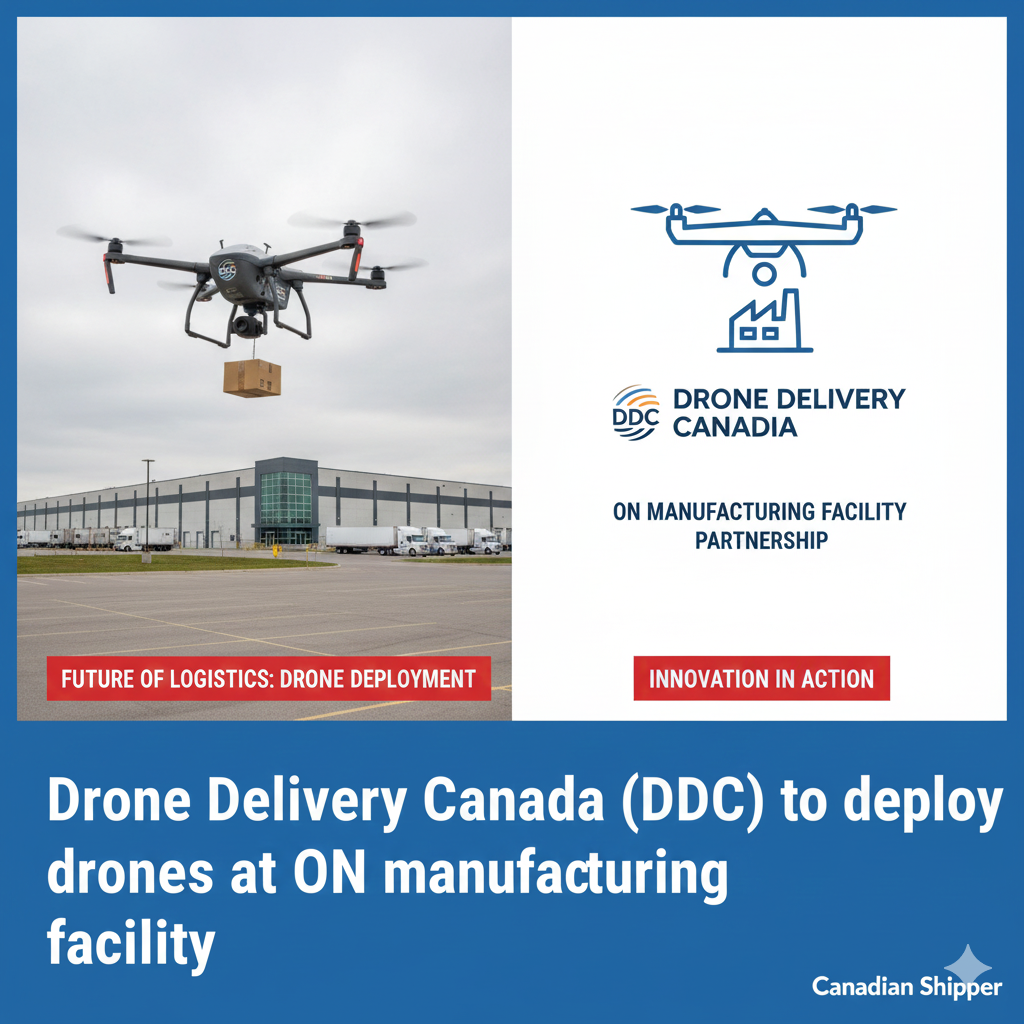
DDC to deploy drones at ON manufacturing facility
Drone Delivery Canada (DDC) is taking another step toward making drone-based logistics a practical part of industrial supply chains. The company has announced plans to deploy its drone delivery platform for Vision Profile Extrusions Limited, a manufacturing company with properties in Vaughan, Ontario. The project is designed to support the movement of goods between the company’s facilities using drones rather than conventional ground transportation.
A New Approach to Manufacturing Logistics
Manufacturing companies often need to move materials, components and other time-sensitive items between nearby facilities. Although these movements may cover relatively short distances, traditional road transportation can introduce delays caused by traffic, scheduling and vehicle availability.
DDC’s proposed solution aims to create a dedicated aerial delivery route between Vision Profile Extrusions’ properties in Vaughan. The project was announced with the assistance of Air Canada Cargo, DDC’s sales agent, highlighting the potential for partnerships between drone technology companies and established logistics providers.
Instead of relying entirely on trucks or other ground vehicles, the drone system can provide a direct connection between designated locations.
How DDC’s Drone Delivery System Works
DDC’s technology combines drones with its proprietary FLYTE logistics software. The platform is designed to manage autonomous cargo deliveries between established depots while monitoring factors such as weather, air traffic and other operational information.
The system also provides shipment tracking, delivery notifications, scheduling and maintenance records. DDC says its platform can integrate with customers’ existing logistics systems through APIs, making it possible to incorporate drone deliveries into broader supply-chain operations.
For industrial customers, this could make drone delivery more than simply a futuristic transportation concept. It can become another tool for moving materials efficiently within an existing logistics network.
Why This Matters for Ontario Manufacturing
The deployment at an Ontario manufacturing facility demonstrates an important potential use case for commercial drones: business-to-business logistics.
Drone delivery does not necessarily have to mean delivering packages directly to consumers. Industrial facilities can benefit from drones when they need to move relatively small or time-sensitive shipments between nearby locations.
Potential advantages include:
- Faster movement of time-sensitive materials
- Reduced dependence on road transportation
- More predictable delivery routes
- Improved logistics flexibility
- Lower transportation delays for short-distance movements
- Greater automation of internal supply-chain operations
DDC has previously demonstrated this model in Ontario. Its commercial project with DSV at the company’s Milton facility became operational in 2020, with the system initially recording approximately 400 flights per month.
Building on DDC’s Commercial Drone Experience
The Vision Profile Extrusions project is part of a broader history of DDC developing drone logistics for commercial and industrial applications.
The company has worked on projects involving logistics, healthcare and airport operations. For example, DDC deployed drone delivery infrastructure at Edmonton International Airport and expanded the project to include deliveries to a medical clinic in Leduc, Alberta.
These projects show how drone delivery is gradually moving beyond experimental demonstrations toward specific commercial routes with defined operational requirements.
The Bigger Picture for Drone Logistics
The manufacturing sector could become an important market for drone logistics because many industrial operations involve frequent movement of goods between facilities.
A drone operating on a predefined route can potentially avoid some of the limitations associated with road transportation. At the same time, companies can maintain control over where drones take off, where they land and what types of cargo they transport.
DDC’s technology is built around this depot-to-depot approach. Its FLYTE software monitors operations from an Operations Control Centre, while the company’s drones are designed for autonomous flight along established routes.
What This Could Mean for the Future
The deployment at Vision Profile Extrusions is significant because it represents a practical application of drone technology inside an established manufacturing environment.
As businesses continue looking for faster and more efficient ways to move goods, dedicated drone routes could become an increasingly attractive option for short-distance logistics. The technology could eventually be used across manufacturing, healthcare, airports, mining, energy and other industries where reliable transportation is important.
DDC’s broader portfolio already reflects this direction, with the company positioning its technology for industrial, healthcare, airport, logistics and remote-community applications.
Conclusion
Drone Delivery Canada’s planned deployment at an Ontario manufacturing facility highlights how commercial drones are evolving from experimental technology into a potential component of everyday business logistics.
By connecting manufacturing facilities through dedicated drone routes, companies can explore new ways to move time-sensitive goods while reducing their reliance on traditional transportation. DDC’s combination of autonomous drones, logistics software and dedicated infrastructure provides a foundation for this model.
The bigger story is not simply about drones flying over Ontario. It is about how autonomous aerial transportation could reshape the way businesses move goods from one facility to another.
As more companies test and adopt these systems, drone delivery could become an increasingly important part of the modern industrial supply chain.
