
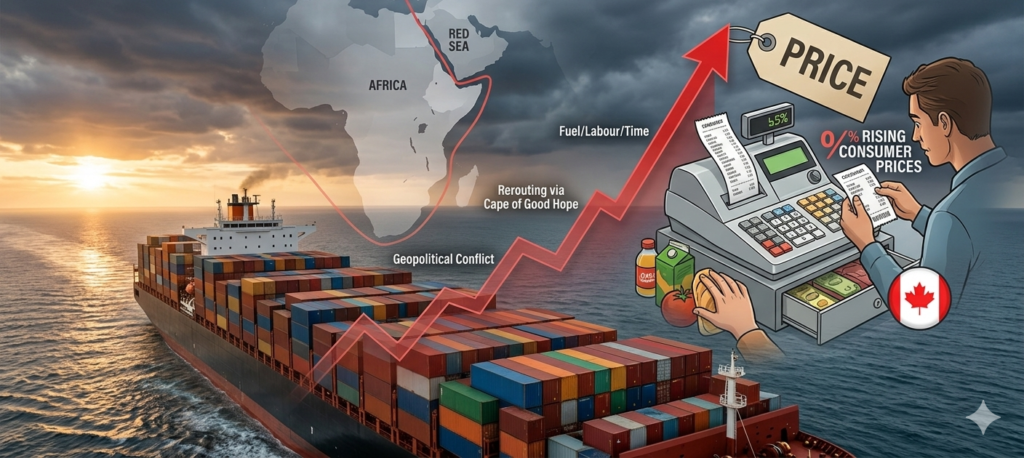
As the war in Iran continues, the rising fuel prices are also increasing costs for Canadian shippers, with effects being felt by consumers in the broader economy.
The price of heavy fuel oil — used to power container ships and other large vessels — at the world’s top 20 refuelling hubs has nearly doubled since the U.S. and Israel launched attacks in late February, according to figures from data platform Ship & Bunker.
Experts say that will filter down to the price locals pay for a variety of items.
The conflict has pushed major shipping companies to halt voyages through the Strait of Hormuz and the Suez Canal.
Red Sea-bound vessels have decided to reroute around Africa’s Cape of Good Hope at a greater cost in fuel, labour and travel time.
Rail transport costs are also increasing. Canadian National Railway Co. hiked its fuel surcharge on domestic container shipments to 30 per cent from 21 per cent before the war, and to 38 per cent from 26 per cent for cross-border cargo. The surcharges are based on diesel fuel prices.
Consumers are already feeling the jump in the price of oil and its derivatives — gasoline, jet fuel and diesel — at the pumps and on their plane fares.
With files from The Canadian Press.
Rising Fuel Costs Could Push Up Shipping Prices
Rising fuel prices linked to the ongoing conflict in Iran are putting additional pressure on Canada’s shipping and transportation industries, and experts warn that consumers could ultimately pay the price.
The cost of heavy fuel oil, which powers large container ships, has nearly doubled at major global refuelling hubs since the attacks began in late February, according to Ship & Bunker.
Major shipping companies have also changed their routes, avoiding the Strait of Hormuz and Suez Canal and sending vessels around Africa’s Cape of Good Hope. The longer journeys mean higher fuel, labour and transportation costs.
Rail transportation is also becoming more expensive. Canadian National Railway has increased fuel surcharges on domestic and cross-border container shipments, reflecting higher diesel prices.
As transportation costs rise across shipping, rail and air travel, consumers could see higher prices for everyday goods, fuel and flights in the months ahead.
The situation highlights how quickly global conflicts and energy prices can affect supply chains—and eventually household budgets.