
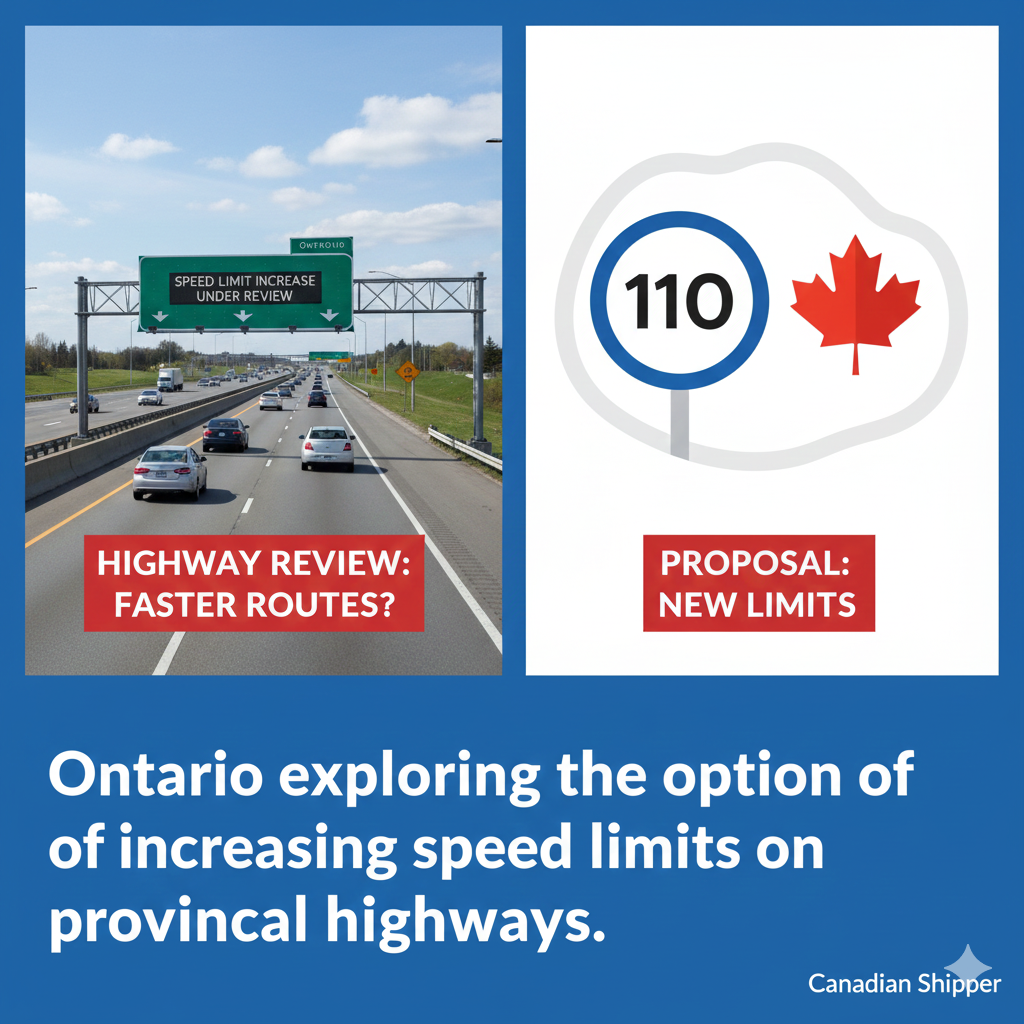
Ontario has been exploring the possibility of increasing speed limits on more sections of its provincial highway network, with the goal of improving travel times and reducing congestion.
The discussion has focused particularly on 400-series highways, where some road sections are considered capable of safely handling higher speeds. The province has previously increased speed limits to 110 km/h on selected highway sections, including parts of Highways 401, 403, 406, 416 and 69.
What Could Change?
The government has considered expanding the 110 km/h limit to additional highway sections where road design, traffic conditions and safety standards allow it. The review is intended to determine where higher speeds could be introduced without compromising road safety.
Higher speed limits could help drivers reduce travel times, particularly on long-distance routes connecting major cities and communities across Ontario.
Impact on Transportation and Logistics
For the trucking and logistics industry, faster highway travel could potentially improve delivery schedules and make long-distance transportation more efficient. Even small reductions in travel time can matter for businesses moving goods across the province.
However, safety remains an important consideration. Higher posted limits need to be matched with appropriate road conditions, enforcement and responsible driving.
Ontario has already expanded 110 km/h limits on additional highway sections in 2026, adding another 938 kilometres to the network.
Looking Ahead
Ontario’s continued review of highway speed limits reflects the province’s broader efforts to improve transportation efficiency. As more highway sections are evaluated, drivers and logistics companies may see further changes to posted speed limits in the future.
For Ontario’s transportation industry, higher speed limits could mean shorter travel times, improved delivery efficiency and greater connectivity across the province, provided safety remains the priority.